English
 Français
 Español

What Materials Make a Baby Feeding Bib Practical?
2026-11-24
Mealtime products for babies need to balance practical functions, comfortable materials, and convenient designs. Among these products, the baby feeding bib plays an important role in helping parents manage food spills and keep clothing cleaner during feeding. For manufacturers, understanding material choices, structural details, and different market requirements is useful when developing products for international distributors, retailers, and private-label brands.
Material Selection Influences Product Performance
Material is one of the first factors manufacturers consider during production. Different fabrics offer different combinations of softness, flexibility, water resistance, and cleaning convenience.
Common material options include:
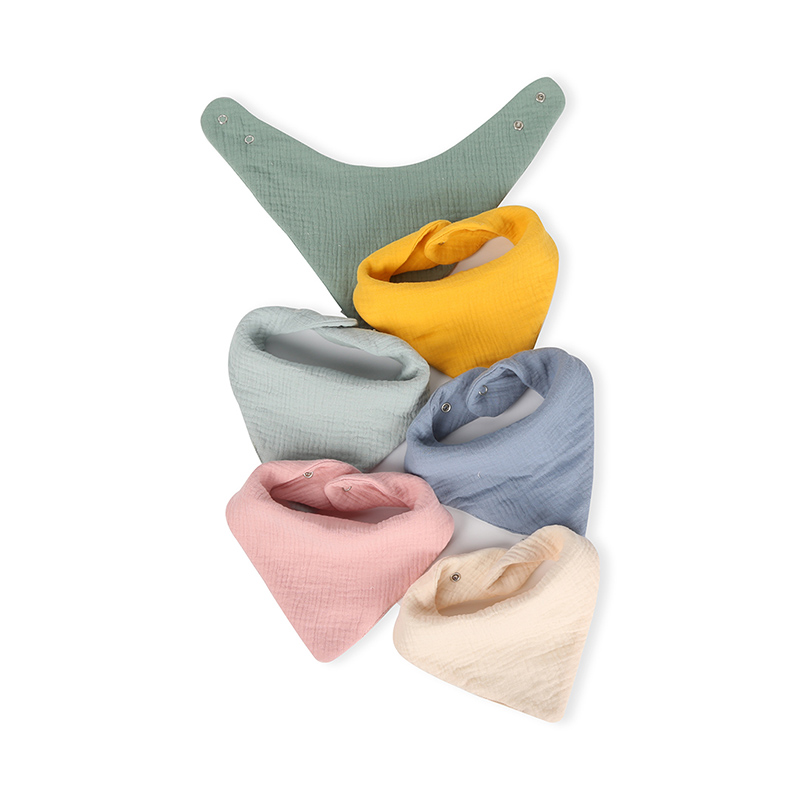
- Cotton: Provides a soft fabric surface and is suitable for textile-based bib designs.
- Polyester: Offers flexible design possibilities and supports various printing methods.
- Silicone: Creates a flexible, water-resistant structure that can include a front food-catching pocket.
- PU-Coated Fabric: Combines a textile surface with a coating that helps reduce liquid penetration.
For example, a cotton bib may appeal to buyers looking for a fabric-based product, while a coated polyester version can serve markets that prefer easier surface cleaning. Material selection should reflect the intended product positioning and customer preferences.
How Bib Structure Affects Daily Feeding
Material alone does not determine how a feeding product performs. Its shape and construction also influence coverage, wearing comfort, and convenience.
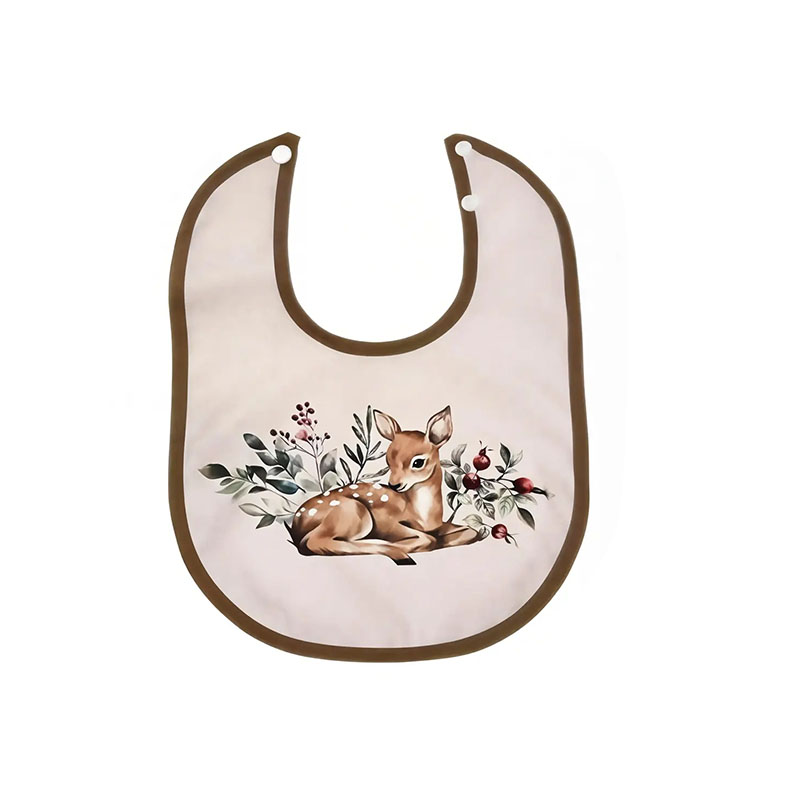
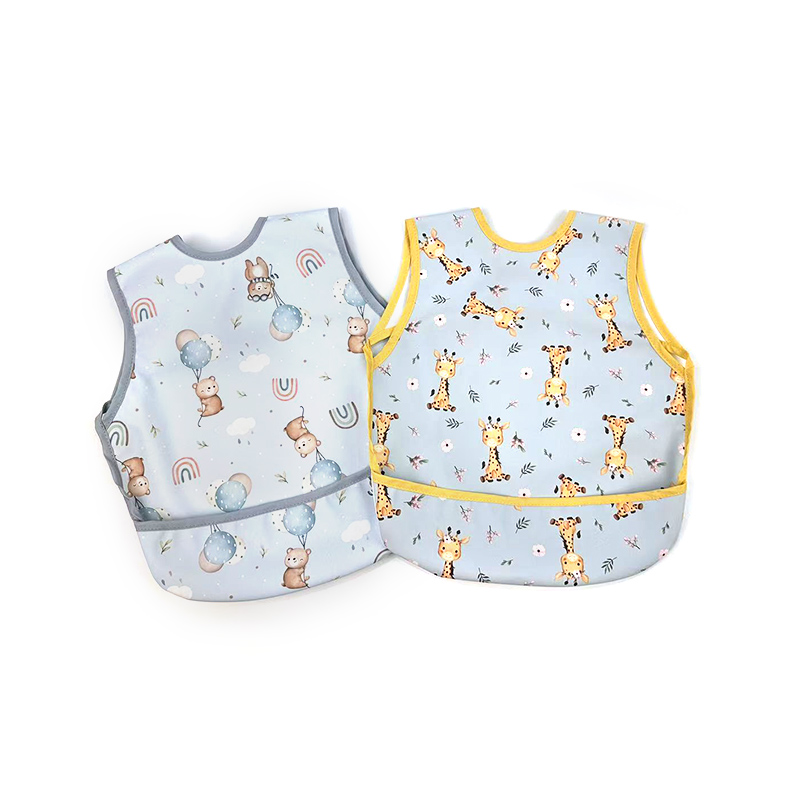
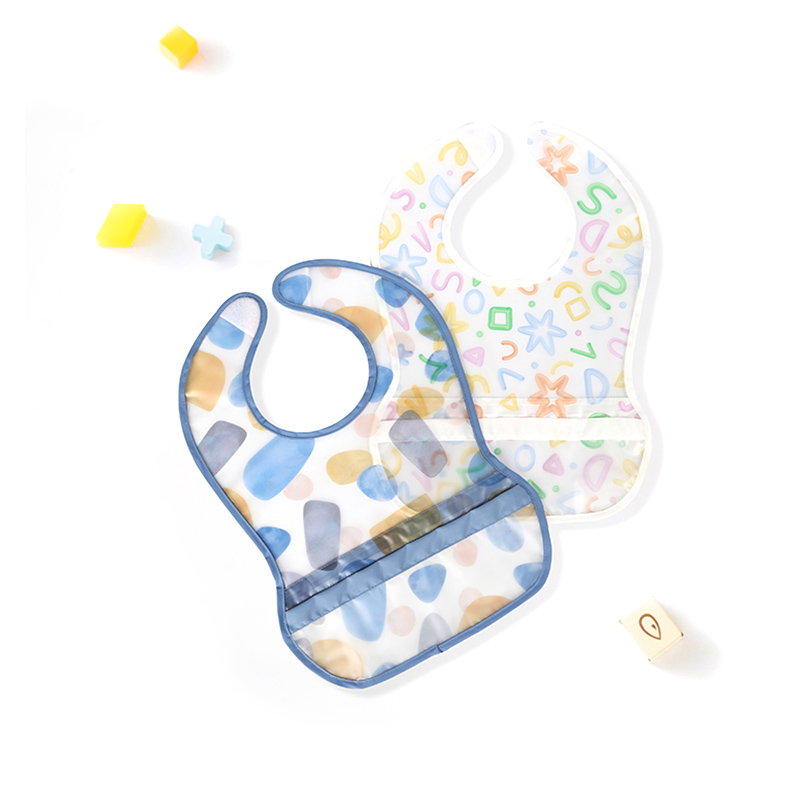
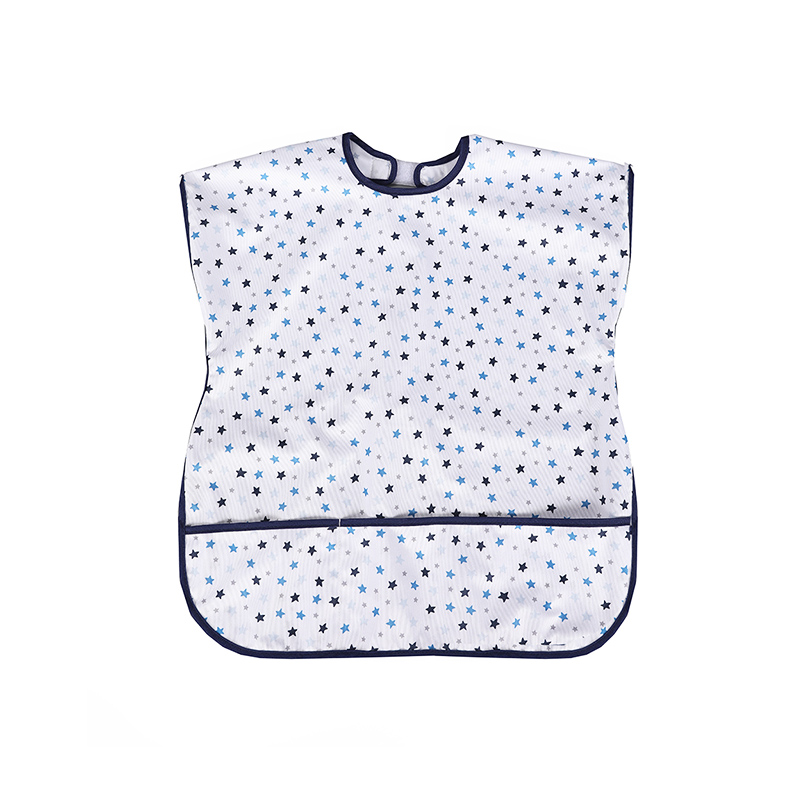
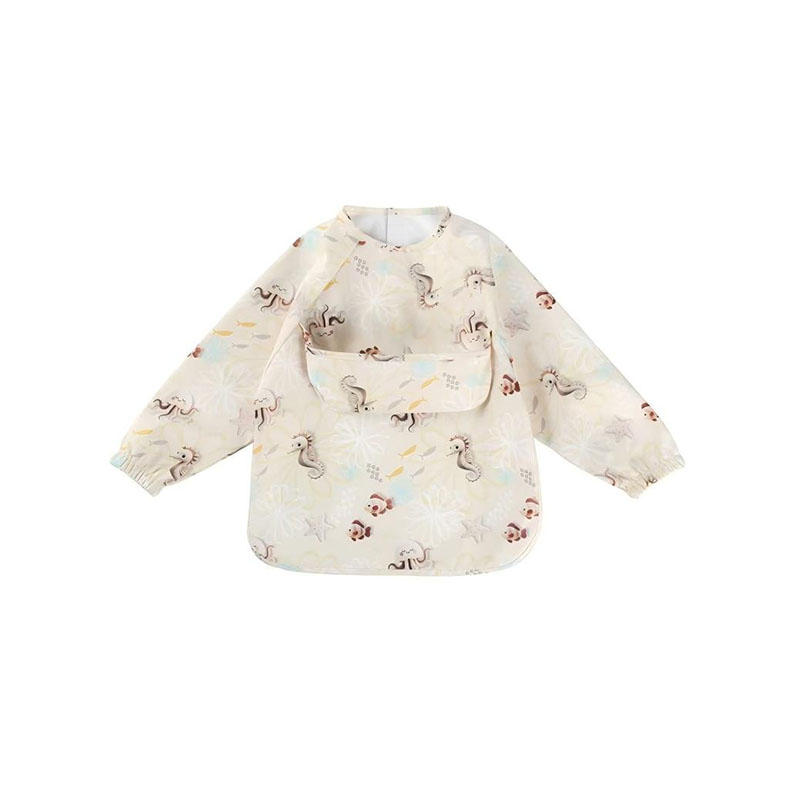
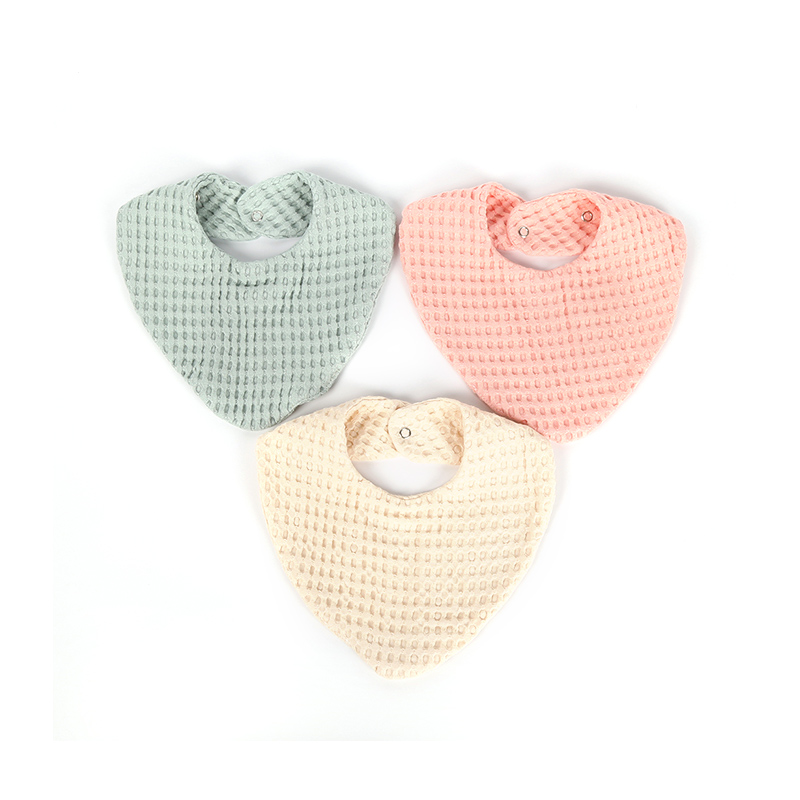
A wider front panel can help cover more of a baby's upper body, while a curved neckline can provide a more comfortable fit. Some designs include a food-catching pocket near the lower edge, which helps collect small pieces of food that fall during meals.
Fastening methods also vary. Snap buttons, hook-and-loop closures, and adjustable neck designs provide different ways to put on and remove the product. Manufacturers can develop several structural options to serve different age groups and feeding habits.
For a baby feeding bib, these details need to work together. A suitable combination of neckline shape, body coverage, and fastening structure makes the product more practical for everyday feeding routines.
Printing and Appearance Create Product Variety
Visual design is another important part of bib manufacturing. Parents often prefer products with attractive patterns, while distributors and retailers need styles that fit their target markets.
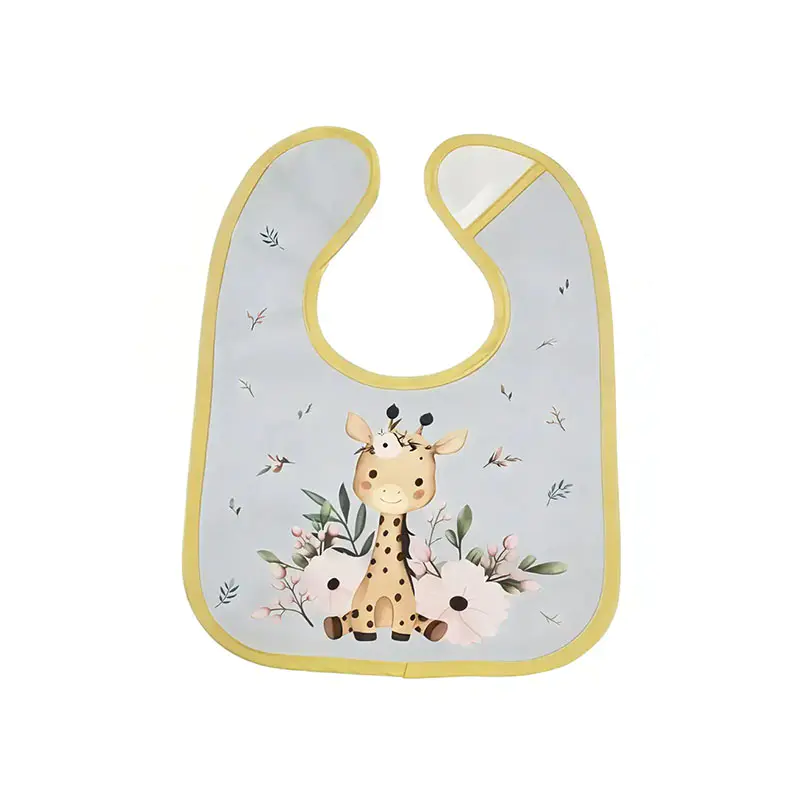
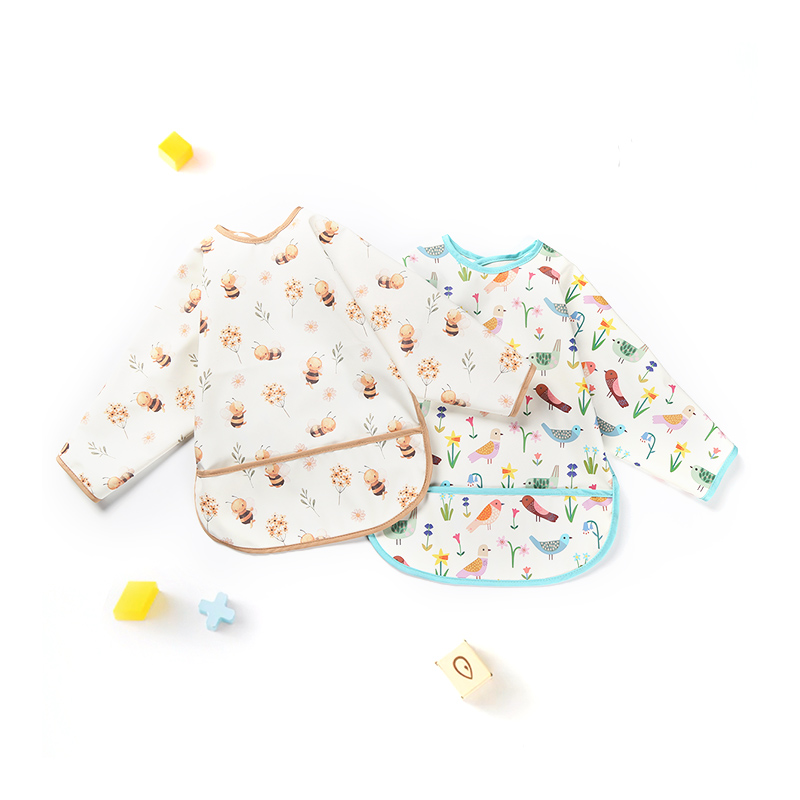
Manufacturers can offer cartoon illustrations, animal patterns, geometric graphics, simple colors, and customized prints. These designs can be applied to different fabric surfaces according to the selected printing process.
Color combinations and pattern placement also affect the overall appearance. For private-label orders, buyers may provide their own artwork, brand colors, or packaging concepts. This allows suppliers to develop product collections that match a retailer's existing baby product range.
A baby feeding bib can also be developed in different shapes and sizes to create product variations within one collection. Combining several patterns with different material options gives importers more flexibility when planning their product assortment.
Why Product Variety Matters to B2B Buyers
Overseas buyers often serve different customer groups, so a single design may not cover every market requirement. Some retailers focus on soft fabric products, while others prefer waterproof surfaces or designs with integrated food-catching pockets.
Offering several product variations helps distributors build a more complete feeding accessory range. Buyers can also combine different colors, printed patterns, fastening methods, and packaging styles under their own brand identity.
When discussing a baby feeding bib project with a manufacturer, buyers can communicate their intended material, dimensions, design artwork, and branding requirements. Clear product information helps both sides establish a suitable manufacturing plan.
Customization Connects Manufacturing with Market Needs
OEM and ODM services provide additional flexibility for international buyers. OEM production generally follows customer-provided designs, while ODM cooperation allows manufacturers to develop product structures and appearance concepts based on a buyer's requirements.
Customization may involve fabric selection, product dimensions, printed patterns, colors, fastening components, logo placement, and packaging. These options allow suppliers to serve different retail channels without limiting their production to a single standard design.
As baby feeding accessories continue to cover a variety of materials and styles, manufacturers need to understand how product construction, appearance, and intended use connect. A well-developed baby feeding bib range can help importers and distributors respond to different market preferences while building a consistent baby product collection.